
Why your coffee at home doesn't taste like it does at a café
Why does your coffee at home often not taste as good as it does in a café? Learn the most important reasons why and how you can get significantly better coffee with simple changes.

You’re probably familiar with this. At a café, the coffee tastes rounded, smooth, and just right. At home, you put in the effort, buy coffee, brew it, and yet it still tastes flat, bitter, or just plain disappointing. Sometimes even sour or just a bit off.
The good news is: It’s rarely your fault. And you don’t need professional equipment to make better coffee, either. Usually, it’s a few fundamental things that make all the difference.
When you understand what really matters, you can significantly improve your coffee at home. Often, even with just small changes.
Why coffee in a café almost always tastes better
In a café, several things come together that are perfectly coordinated. The beans are fresh, the grinder is precisely adjusted, and the preparation follows clear routines. Then there’s the experience.

At home, this synergy is often missing. It’s not one big mistake, but many small things that together ensure the coffee doesn’t taste the way you expect.
We are going to take a look at exactly these points now.
The biggest difference often lies in the bean
Many underestimate how much the quality of the bean affects the taste. Supermarket coffee is often designed for a long shelf life and is roasted very dark. This creates a flavor that quickly turns bitter or flat.
High-quality coffee is roasted differently. The goal isn’t shelf life, but taste. The aromas are preserved and taste clearer, smoother, and more balanced.
If you’ve ever thought your coffee just doesn’t taste right, this is often the reason. Not your preparation, but the starting material.
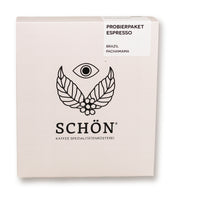
If you want to consciously experience this difference, a comparison can help. A tasting pack is ideal for this, as you can test different flavor profiles side by side.
Freshness is almost always underestimated
Another crucial point is freshness. Coffee loses its aroma relatively quickly. While many packages show a best-before date, the roast date is much more important.
Freshly roasted coffee contains significantly more aroma. If the coffee is too old, it often tastes empty or stale, no matter how well you brew it.
So, if your coffee lacks flavor or just seems boring, that can be a clear indication that it has been stored for too long.
Grind size and why it changes so much
The grind size determines how the coffee is extracted. It sounds technical, but it’s actually quite simple.
If the coffee is ground too finely, it quickly turns bitter. If it’s too coarse, it tends to taste sour or thin. This is exactly where many of the typical problems like bitter or watery coffee arise.
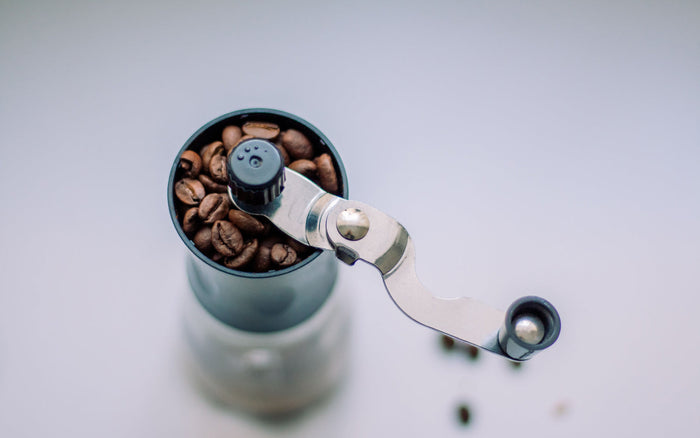
Many people don’t even realize they can start here. Yet, adjusting the grind size is one of the fastest ways to significantly improve the taste.
Why water has a greater impact than you think
Coffee consists largely of water. That’s why the water itself has a strong influence on the taste.
Very hard or highly mineralized water can make coffee taste flat or bitter. Water that is too soft, on the other hand, can make the coffee seem unbalanced.
So, if your coffee isn't convincing despite using good beans, it’s worth taking a look at your water. This is often a point that many completely overlook.
Typical everyday mistakes that ruin the taste
In addition to beans, freshness, and grind size, there are a few classic mistakes that quickly creep in.
Too little coffee per cup leads to a watery result. Too much coffee can make it unpleasantly strong. Temperature also plays a role. If the water is too hot, the coffee quickly becomes bitter.
Often, it’s a combination of everything. Coffee that’s a bit too old, a non-optimal grind, and the wrong ratio. This is exactly what creates that typical taste that simply isn't convincing.
Why your coffee tastes bitter, sour, or flat
If coffee tastes bitter, it is often due to a grind that is too fine or a very dark roast. If it seems sour, it is often ground too coarsely or not extracted correctly.
A flat taste usually results from a lack of freshness or a low ratio of coffee to water.
The decisive thing is: These problems are solvable. And they almost always have clear causes.
How to get better coffee at home, step by step
You don't have to change everything at once. Small adjustments already make a big difference.
First, pay attention to fresh beans. Then, to the grind size. And finally, the preparation. When these three things align, the taste often improves noticeably right away.
If you want to find out which flavor profile really suits you, a comparison makes sense. Different coffees behave differently, and that’s exactly how you get a feel for what you truly like.

How to find coffee that really suits you
Not every coffee suits every taste. Some like it bold and chocolaty, others prefer it light and clear.
If you are looking for that specific taste, it helps to use simple flavor profiles as a guide.
If you are looking for a rounded, chocolaty, and slightly fruity coffee, a Peru Pachamama filter coffee is a very accessible entry point.
If you tend to drink your coffee as an espresso and are looking for a chocolaty, nutty, and very balanced profile, an India Plantation Espresso is a good starting point.
And if you are curious and want to experience how fruity and floral coffee can be, a Sudan Rume from Colombia is worth trying. It shows very clearly how diverse coffee can be.
You don't have to decide right away. Often, it's enough to try out a few directions and see what you really like.
FAQ about coffee at home
Why doesn’t my coffee at home taste good
In most cases, it’s the combination of bean quality, freshness, and grind size. Often, it’s several small factors that influence the taste together.
Why is my coffee bitter or sour
Bitter coffee is usually caused by a grind that is too fine or a very dark roast. Sour coffee is often caused by a grind that is too coarse or uneven preparation.
Is expensive coffee really worth it
Expensive coffee is often not just more expensive, but processed differently. The difference lies in the taste. Many immediately notice that the coffee seems clearer and more pleasant.
How do I recognize good coffee
A good sign is freshness, a clean roast, and a clear taste without strong bitterness. If the coffee seems balanced and doesn't have an unpleasant aftertaste, that is usually a good sign.
How do I make coffee like in a café
The most important step is to understand the basics. Fresh beans, the right grind size, and a simple, clean preparation will often get you very close to the result from the café.
A new look at your coffee at home
Coffee at home doesn't have to be a compromise. If you understand what matters, you can make significantly better coffee with little effort.
It’s not about perfection, but about getting a feel for the right adjustments. And that is exactly what develops with every cup of coffee you drink more consciously.
If you are unsure what suits you or where you should start, you can get in touch anytime via the contact page. Often, a few tips are enough to bring your coffee to a whole new level.