
Why good coffee suddenly costs €15–20 and whether it's really worth it.
Why is good coffee suddenly so expensive and is it really worth it? Find out what is behind the price and why many can taste the difference immediately.

Perhaps you have wondered about this before. You are standing in front of the coffee on the shelf, see the price, and think to yourself why this coffee suddenly costs 15 or even 20 euros. And is it even worth it, or is it just marketing?
The short answer is: Yes, the difference is real. But it lies not only in the price, but above all in the taste, the quality, and in how this coffee is created. That is exactly what this article is about.
Why has coffee become so expensive
Many people are currently looking for exactly this. Why has coffee become so expensive and why are prices continuing to rise? Part of it is indeed due to global developments such as harvest conditions, transport costs, and demand. But that only explains part of it.
The crucial difference is not that coffee is becoming more expensive in general, but that there are different quality levels. And these are often mixed together.
The big difference between mass-market coffee and high-quality coffee
The biggest difference is not in the price, but in the origin of the product. Mass-market coffee is optimized to be produced as cheaply as possible. This means large quantities, fast processing, and often little focus on taste.
High-quality coffee, on the other hand, is treated differently. The beans are harvested more selectively, processed more slowly, and roasted more consciously. The goal is not mass, but taste.
This is exactly where the difference begins, which many feel in everyday life without being able to name it exactly.

Why doesn't my coffee at home taste that good
This is one of the most common questions of all. And it is directly related to the quality of the beans. If the foundation is not right, you can hardly save anything with the preparation.
Many supermarket coffees have already been stored for a long time, are often roasted very dark, and thus lose clarity in taste. The result is a coffee that seems either bitter or flat.
High-quality coffee, on the other hand, naturally brings more flavor with it. And that is precisely why it is often perceived as much more pleasant.
Taste is the real difference
In the end, it is not about price, but about how coffee tastes. And this is where the difference becomes truly tangible. While cheap coffee often seems one-dimensional, high-quality coffee brings more depth, more balance, and more clarity.
If you want to consciously experience this difference once, it is worth trying a coffee that is accessible and does not seem too extreme. Beginners in particular are often surprised at how soft and round good coffee can taste without being bitter.
A good example of this are coffees with a chocolatey profile and low acidity. They seem familiar, but significantly more refined and structured than classic coffee.
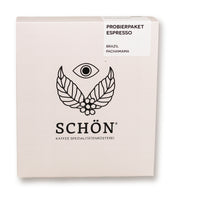
If you are looking for exactly this taste, a Brazil Natural with chocolatey notes and low acidity is a very good start.
Why is coffee sour and is that bad
Many associate high-quality coffee with acidity and are therefore put off. Yet, acidity is not automatically something negative. It provides freshness and structure in the taste.
It only becomes problematic if the coffee is unbalanced or prepared incorrectly. Then it can taste unpleasantly sour.
That is why it is important to understand that not every high-quality coffee is sour. There are many profiles. Some coffees are fruity and lively, others more chocolatey, nutty, and soft. This is precisely why it is worth not just looking at the price, but at what you are actually looking for in terms of taste.
Origin and transparency: What you are really paying for in the price
Another big difference lies in the origin. With cheap coffee, it is often barely traceable where the beans come from exactly, how they were processed, and who earned money from them. With high-quality coffee, this transparency is usually much greater.
You often find out which country the coffee comes from, sometimes even from which farm or region. At first, this sounds like a detail, but it makes a big difference. Because origin is not just information for labels, but a real quality factor.
Whoever knows where their coffee comes from also understands better why it tastes the way it does. At the same time, transparency creates trust. And precisely this trust is part of the value that many seek in good coffee.

Fair trade and quality are more closely linked than many think
When coffee is very cheap, the question of where costs were cut inevitably arises. Often this happens at the beginning of the chain. That is, where it is cultivated, harvested, and sorted.
High-quality coffee requires care. Ripe cherries must be harvested cleanly, processed correctly, and stored sensibly. This only works if people along the chain are paid accordingly. Quality and fair payment are therefore much more closely linked than it appears at first glance.
This does not mean that expensive coffee is automatically fair. But extremely cheap coffee leaves little room for true quality and for a system that works in the long term.
Why small roasteries often have to charge more
Many compare the price of coffee from a small roastery directly with mass-produced goods from the supermarket. The comparison seems obvious, but in reality, it is not quite fair.
Small roasteries work with different quantities, different standards, and different goals. It is not about processing huge batches as efficiently as possible, but about roasting beans so that their taste truly comes into its own.
This is more laborious, slower, and often riskier. In return, however, you don't get interchangeable coffee in the end, but a consciously developed cup that is not reduced to bitterness.
Price and value are not the same
Exactly at this point, a change in perspective is worthwhile. Many evaluate coffee by the price per pack. This is understandable, but often falls short. More exciting is the question: What do I really get for it per cup?
If a coffee is indeed more expensive but tastes significantly better, is consumed more consciously, and gives you more pleasure, the calculation changes. Suddenly, it is no longer just about costs, but about value.
A cheap coffee that tastes bitter and that you only drink with a lot of milk or sugar is not automatically the better choice. A high-quality coffee that you enjoy drinking and can truly savor may be the more sensible decision in the end.
Is expensive coffee really worth it
The honest answer is: It depends. If you only see coffee as a quick pick-me-up and taste is hardly important to you, the difference will perhaps be less relevant for you.
But if you value aroma, clarity, balance, and a pleasant mouthfeel, then expensive coffee is often worth it very quickly. Not because it is luxurious, but because for the first time you truly taste what coffee is actually capable of.
Many notice this after just a few cups. Not always as a huge wow effect, but rather as a quiet feeling of: Ah, so that is how coffee can also taste.
How do I recognize good coffee
You don't just recognize good coffee by the price. Freshness, transparent origin, a clean roast, and a comprehensible flavor profile are important. If it is clearly described how the coffee tastes, where it comes from, and what it is intended for, that is usually a good sign.
The way coffee is described also reveals a lot. If only strong buzzwords are used but no real information is available, much often remains vague. Good coffee doesn't have to be explained in a complicated way, but it should be understandable.
If you are unsure, a direct comparison often helps. Trying several coffees side by side is usually the fastest way to not just read about quality, but to really understand it.
How to get started sensibly without spending too much money right away
Many people hesitate with high-quality coffee not because they don't like the taste, but because they don't know where to start. That is precisely why it makes sense not to want to find that one perfect bean immediately, but to first try out different directions.
A comparison helps more than long pondering. If you try different coffees side by side, you quickly notice whether you prefer chocolatey, fruity, nutty, or softer profiles.
A filter coffee tasting pack is a sensible start for exactly that. Not because you should buy immediately, but because it allows you to understand without much risk whether the difference is really worth it for you in terms of taste.
Why cheap coffee often seems more expensive than thought in the end
That sounds contradictory at first, but it is often noticeable in everyday life. Cheap coffee is often drunk faster, perceived less consciously, and often balanced with additives so that it tastes more pleasant. More milk, more sugar, more habit.
High-quality coffee often works differently. It is drunk more slowly, perceived more consciously, and needs less correction. This changes not only the taste experience but often also the handling of coffee as a whole.
Suddenly, it is no longer about just drinking coffee, but about enjoying a good cup. And that is exactly where the real value lies for many.

What good coffee can change for your everyday life
Perhaps this sounds bigger than it is at first. But good coffee often changes not only the taste but also the attitude towards it. You drink more slowly. You pay more attention to preparation. You notice differences that you didn't even notice before.
This is not a luxury problem, but a form of everyday quality. And that is exactly why many are eventually willing to spend more on coffee. Not because they have to, but because they have understood the difference.
FAQ: The most common questions about expensive coffee
Why has coffee become so expensive
Part of it is due to increased costs for cultivation, harvesting, and transport. The bigger difference arises from quality, selection, transparency, and artisanal processing.
Is expensive coffee really worth it
For many, yes, especially if taste is important. Whoever drinks consciously and perceives differences usually realizes quickly that high-quality coffee offers more than just a higher price.
Why does coffee from the roastery cost more
Because small roasteries work differently than mass suppliers. They buy more consciously, roast more carefully, and focus more on taste instead of maximum quantity.
How much should good coffee cost
There is no fixed number. The decisive factor is not just the price, but whether the origin, quality, and taste are comprehensible. A higher price alone does not automatically make coffee good, but very cheap coffee usually has little room for true quality.
Is cheap coffee automatically worse
Not automatically, but often simpler, more bitter, and less nuanced. Many differences only show up in direct comparison.
How do I recognize good coffee when buying
Pay attention to freshness, clear origin, comprehensible description, and a realistic flavor profile. If you have the feeling that you can really classify the coffee, that is usually a good sign.
A different look at the price of coffee
Perhaps good coffee is not just expensive. Perhaps it is more honestly priced. If one understands how much work, selection, and care goes into a truly good bean, the question often changes.
Then it is no longer just about why coffee costs 15 to 20 euros. But about what you get for it. And exactly there, the real understanding of quality begins for many.
If you are unsure which coffee suits your taste or where you should start sensibly, you can contact us at any time via the contact page. A short question is often enough to find the right direction.