
Coffee for cappuccino: Which beans are best?
Which coffee goes best with cappuccino? Find out why the right espresso beans are crucial to ensure your cappuccino doesn't taste watery, bitter, or too mild.

A good cappuccino doesn't just depend on creamy milk foam. The most important factor is the coffee underneath. If the espresso is too weak, it gets lost in the milk. If it's too bitter, the cappuccino quickly tastes harsh and unpleasant. And if the beans are too light or too acidic, the cappuccino can sometimes seem sharp rather than rounded.
That is exactly why it is worth asking: Which coffee goes best with a cappuccino? The best answer is usually an espresso with enough body, natural sweetness, and a flavor profile that remains clearly recognizable even with milk. Chocolatey, nutty, and caramel-like espresso beans often work particularly well.
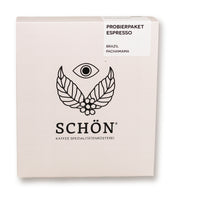
In this article, you will learn which beans really suit a cappuccino, what you should look for when buying espresso beans, and why the same coffees often work for Flat White and Latte Macchiato as well. We will also show you which espressos from Schön Kaffee are well-suited for milk-based drinks. If you would like to test different espressos straight away, the Espresso Tasting Pack from Schön Kaffee is a sensible starting point.
In short: Espresso beans with body, sweetness, and low dominant acidity are suitable for cappuccino. Chocolatey, nutty, and caramel-like espressos often fit particularly well because they remain rounded in milk and do not get lost.
Table of contents
- Coffee for cappuccino: The short answer
- Why the beans are so important for cappuccino
- Which beans go with cappuccino?
- Cappuccino, Flat White, and Latte Macchiato: Do you need different beans?
- Coffee for cappuccino from a fully automatic machine or portafilter
- Why does my cappuccino taste too bitter, sour, or watery?
- Buying espresso beans for cappuccino
- Schön Kaffee recommendations for cappuccino
- Frequently asked questions about coffee for cappuccino
Coffee for cappuccino: The short answer
For a cappuccino, you generally need espresso beans, not a classic filter roast. The espresso forms the base of the drink and must be strong enough to stand up to the milk. However, this does not mean that the coffee has to taste dark, bitter, or heavy.
Good beans for cappuccino usually have a balanced profile. They provide body, sweetness, and clear aromas. Notes of chocolate, hazelnut, nougat, caramel, honey, or dried fruits are particularly popular. Such coffees combine well with milk and appear pleasantly rounded in a cappuccino.
What makes good cappuccino coffee?
A good coffee for cappuccino remains recognizable even with milk. It does not taste thin, scratchy, or just like hot milk. The espresso should have enough intensity but not be so bitter that the cappuccino seems harsh.
If you drink cappuccino often, it is therefore worth choosing an espresso that not only works as a straight shot but also in milk-based drinks. This is exactly where good cappuccino beans differ from very light or very delicate coffees.
Why the beans are so important for cappuccino
Many people think of the milk first when a cappuccino doesn't taste right. Of course, milk, temperature, and foam play a role. Nevertheless, the problem often lies with the coffee. If the espresso has too little body, the cappuccino tastes flat. If it is roasted too dark, it becomes bitter. If it is too light and fruity, it can seem unusually acidic with milk.
The right coffee ensures that the cappuccino tastes balanced. The milk adds sweetness and creaminess. The espresso provides depth, aroma, and structure. Only together do they create a rounded cappuccino.
Milk makes coffee milder, but not automatically better
Milk can soften bitterness and make acidity appear milder. However, it can also mask delicate aromas. That is why an espresso for cappuccino needs enough presence. A very light coffee can almost disappear in milk.
Especially for cappuccino, Flat White, and Latte Macchiato, espressos that naturally bring notes of chocolate, nut, caramel, or nougat work well. These flavors harmonize very well with milk.
Which beans go with cappuccino?
The best beans for cappuccino are usually espresso roasts with a medium to somewhat stronger roast profile. They should not be too light, but they shouldn't taste burnt or bitter either. Balance is the key.
If you want to buy espresso beans for cappuccino, look for terms like chocolatey, nutty, caramel-like, creamy, full-bodied, mild, low acidity, or good sweetness. These are signs that the coffee can harmonize well with milk.
Chocolatey espresso beans for cappuccino
Chocolatey espresso is almost always a safe choice for cappuccino. It appears rounded, familiar, and pleasant in milk. Aromas of milk chocolate, cocoa, hazelnut, or nougat go very well with creamy milk foam.
If you have often enjoyed cappuccino at a café but can't achieve the same rounded taste at home, a chocolatey espresso can be a good first step.
Nutty and caramel-like beans for milk drinks
Nutty and caramel-like coffees bring natural sweetness and body. They often taste softer in a cappuccino than very fruity coffees and go particularly well with Latte Macchiato or Flat White.
Brazilian espressos, in particular, are popular for this taste because they often appear mild, sweet, nutty, and chocolatey.
Espresso with low acidity for cappuccino
Many people look for coffee with low acidity because their cappuccino otherwise tastes sharp or disjointed. For milk drinks, coffees with low dominant acidity are often pleasant because they blend more roundly with milk.
Low acidity, however, does not mean low flavor. A good espresso can be mild, sweet, and aromatic nonetheless.
Cappuccino, Flat White, and Latte Macchiato: Do you need different beans?
You do not necessarily need different beans for every milk-based drink. A good espresso for cappuccino often works for Flat White and Latte Macchiato as well. Nevertheless, there are slight differences.
In a cappuccino, the ratio of espresso, milk, and foam is relatively balanced. In a Flat White, the espresso is often more prominent. In a Latte Macchiato, there is more milk involved, which is why the espresso needs enough strength so it doesn't get lost.
Coffee for cappuccino
For cappuccino, an espresso with sweetness, body, and rounded aromatics fits well. Chocolate, hazelnut, nougat, and caramel are ideal flavor profiles. The coffee should remain clear in milk, but not taste bitter.
Coffee for Flat White
Flat White is often more intense than cappuccino because the espresso flavor is more prominent. Here, beans with more depth and structure are a good fit. A chocolatey or nutty espresso works very well, while a fruity espresso can be exciting for experienced coffee drinkers.
Coffee for Latte Macchiato
Latte Macchiato contains a lot of milk. Therefore, the espresso should have enough body. Very light coffees quickly vanish here. A stronger espresso with chocolate, nut, or dried fruit notes is usually the better choice.
Coffee for cappuccino from a fully automatic machine or portafilter
Whether you prepare a cappuccino with a fully automatic machine or a portafilter changes the choice of beans. Both systems can make good cappuccino, but they work differently.
Which beans for cappuccino from a fully automatic machine?
For fully automatic machines, espresso beans that are not too lightly roasted are often suitable. Very light coffees can quickly taste sour or flat in a fully automatic machine because the machine is less precisely controllable than a portafilter.
If you drink cappuccino from a fully automatic machine, look for rounded espressos with chocolate, hazelnut, caramel, body, and low acidity. Such coffees usually function more reliably in everyday use.
Which beans for cappuccino from a portafilter?
With a portafilter, you have more control over grind size, dosage, and extraction time. This allows you to dial in more demanding espressos well. For beginners, however, rounded, chocolatey beans are easier here too than very light and fruity coffees.
If you mainly drink cappuccino with your portafilter, it is worth choosing an espresso that harmonizes with milk while also tasting pleasant on its own.
Why does my cappuccino taste too bitter, sour, or watery?
If your cappuccino at home doesn't taste good, it is often due to a combination of beans, grind size, extraction, and milk quantity. The good news: often a more suitable espresso is enough to significantly improve the result.
The cappuccino tastes too watery
If your cappuccino tastes watery, the espresso is often too weak. This can be due to too little coffee, a grind that is too coarse, extraction that is too short, or beans that are too light.
For milk drinks, you need a coffee with enough body. A chocolatey espresso or a stronger blend can work much better here.
The cappuccino tastes too bitter
Bitterness can arise from beans that are too dark, a grind that is too fine, extraction that is too long, or preparation that is too hot. Old beans can also leave a flat, bitter impression.
If your cappuccino tastes bitter, that doesn't automatically mean you need a lighter coffee. Often a rounded espresso with clean sweetness is the better solution.
The cappuccino tastes too sour
Acidity in a cappuccino is often caused by very light beans, a grind that is too coarse, or extraction that is too short. In combination with milk, this can quickly seem strange.
If you are looking for coffee with low acidity, start with a mild espresso that brings chocolatey and nutty aromas. This is often the more pleasant choice for cappuccino.
Buying espresso beans for cappuccino
If you want to buy espresso beans for cappuccino, you shouldn't just look at intensity. The decisive factor is whether the coffee goes well with milk. An espresso can be exciting on its own but get lost in a cappuccino. Conversely, a very rounded espresso can work perfectly in milk.
When buying, pay attention to the preparation recommendation. If a coffee is recommended for portafilters, fully automatic machines, stovetop espresso makers, and milk drinks, that is a good sign. Furthermore, flavor descriptions such as chocolate, hazelnut, nougat, caramel, dried fruit, or low acidity are helpful.

Why an espresso tasting pack is useful
Many people don't know right away whether they prefer their cappuccino mild, strong, chocolatey, or nutty. An espresso tasting pack helps you test different beans without having to buy large bags right away.
This is particularly sensible if you have a new machine or want to switch from classic supermarket coffee to freshly roasted espresso beans.
Whole beans or ground?
For cappuccino, whole beans are usually the better choice. Fully automatic machines and portafilters work best with freshly ground coffee. This helps aroma, scent, and crema to be preserved better.
If you want to read more about this, our article whole coffee beans or ground coffee beans is relevant.
Schön Kaffee recommendations for cappuccino
To make the selection easier, you will find suitable espresso recommendations from Schön Kaffee here. All three directions are well-suited for preparing cappuccino, Flat White, or Latte Macchiato at home.
For mild cappuccino with low acidity
BRAZIL Brazil Espresso fits well if you are looking for a soft, sweet, and chocolatey nutty espresso. It is a good choice for cappuccino from a portafilter, fully automatic machine, or stovetop maker.
For stronger milk drinks
SCHÖN DUNKEL Espresso Blend fits well if you don't want your coffee to get lost in milk. The blend brings full body, low acidity, and a rounded sweetness. Particularly suitable for cappuccino, Flat White, and Latte Macchiato.
For aromatic cappuccino with more depth
PACHAMAMA Peru Espresso fits if you are looking for a strong and aromatic espresso for cappuccino. A good choice if you like milk-based drinks but still want a clearly recognizable coffee character.
For anyone who wants to test first
If you don't yet know which cappuccino beans suit you, start with the Espresso Tasting Pack from Schön Kaffee. This allows you to compare different espressos and find out faster which coffee suits your milk, machine, and taste.
You can also directly discover all espresso coffees from Schön Kaffee. If you are unsure, feel free to get in touch via the Schön Kaffee contact page. A short recommendation often helps more than comparing for a long time.
Frequently asked questions about coffee for cappuccino
Which coffee is suitable for cappuccino?
For cappuccino, an espresso roast with body, sweetness, and low dominant acidity is usually suitable. Chocolatey, nutty, and caramel-like espresso beans work particularly well.
Which beans go with cappuccino?
Beans that do not get lost when mixed with milk go well with cappuccino. Good indicators are aromas such as chocolate, hazelnut, nougat, caramel, dried fruit, and a full body.
Do you need espresso beans for cappuccino?
Yes, as a rule, espresso is the best base for cappuccino. Filter coffee is usually too light and does not bring enough intensity for milk drinks.
Which espresso beans are good for cappuccino from a fully automatic machine?
For fully automatic machines, medium-roasted espresso beans with low acidity, rounded sweetness, and enough body are suitable. Very light coffees can quickly taste sour in a fully automatic machine.
Which espresso beans are good for cappuccino from a portafilter?
For a portafilter, espressos with sweetness, body, and balance are suitable. Beginners often start more easily with chocolatey or nutty beans than with very light, fruity espressos.
What is the difference between cappuccino, Flat White, and Latte Macchiato?
All three drinks are based on coffee and milk, but differ in the ratio of espresso, milk, and foam. Flat White often tastes more intensely of coffee, Latte Macchiato contains more milk, and cappuccino lies somewhere in between in terms of taste.
Why does my cappuccino taste bitter?
Bitterness can be caused by beans that are too dark, a grind that is too fine, extraction that is too long, or old beans. A balanced espresso with sweetness and body can help.
Why does my cappuccino taste sour?
A sour cappuccino is often caused by beans that are too light, a grind that is too coarse, or extraction that is too short. For many milk drinks, milder espressos with low acidity are more pleasant.
Which espresso goes with Latte Macchiato?
For Latte Macchiato, you need an espresso with enough body because there is a lot of milk in the drink. Chocolatey, nutty, and stronger espressos work particularly well here.
Is an espresso tasting pack useful for cappuccino?
Yes, especially if you don't yet know whether you prefer your cappuccino mild, strong, nutty, or chocolatey. An espresso tasting pack reduces bad purchases and helps you find suitable beans.
The right espresso makes your cappuccino better
A good cappuccino starts with the beans. Milk can compensate for a lot, but it cannot rescue a weak or unsuitable espresso. If your cappuccino tastes too watery, bitter, or sour, it is therefore worth taking a look at the beans first.
For most cappuccino fans, espressos with chocolate, nut, caramel, body, and low acidity are a very good starting point. They taste rounded, remain recognizable in milk, and function reliably in everyday life.
If you would like to start right away, test the Espresso Tasting Pack. For a mild start, BRAZIL Brazil Espresso is a good fit. For stronger milk drinks, SCHÖN DUNKEL is a good choice.